
Magnus stared at the closed concrete gate, beer in hand.
“If this holds, I’d like Hesse to be built of concrete in the next war.”
“There won’t be a next war in Hesse,” said Claudia.
A shot rang out from the stairwell.
The silver jellyfish burst open on one side. Shards of plastic scattered across the concrete.
Magnus ducked behind a parked car.
“I stand corrected: it’s a very loud shooting exercise.”
The cadets took cover at the same time. Some behind cars, others behind pillars, one behind an electric delivery scooter that offered neither protection nor dignity. Berger and Björkhagen threw themselves behind a saloon car, Bögös and Brunthaler behind a concrete pillar. Ringhofer pulled the aquavit glasses off the bonnet as if they were military-grade equipment.
Cadet Caba lingered for a moment too long until Bauer tugged her by the sleeve behind an SUV.
“Get down!”
“I’m down!”
“Lower still!”
A second shot.
The fishing net arch tore apart. Colourful plastic lids rained down onto the ground.
“Is that because of the sculptures?” called Fliesser from behind a pillar.
“Or because of the car?” asked Guldovacz.
“It’s not a car anymore,” said Anya, who was gripping the steering wheel and turning it sharply because there was no way through the concrete wall. “It’s an emergency vehicle now.” Anya rolled slowly down the ramp towards the service lane.
“They’ve opened it up with a hairpin bend! It’s steeper than the Traunstein!” shouted Köck.
Claudia grabbed the steering wheel. “You’re not actually planning to run Ravn over with the car and those plastic bits sticking out, are you? They’ve got firearms and we’ve got radioactive waste in the boot – alongside two top athletes.”
“Perhaps it’s a politically motivated terrorist attack,” said Schmalzl very seriously.
“Or religious,” said Pfingstner. “There was something Christian about that fishing net arch.”
“That was plastic rubbish!” cried Claudia.
“You can turn anything into a liturgy,” muttered Magnus. “Just ask Austria.”
Then Ravn arrived.
Not alone.
She stepped out from behind the shot-up plastic barrier, flanked by six security guards in ice-white protective jackets. Two were carrying pistols, one a compact rifle, two others batons and walkie-talkies, and the last one clearly saw himself as the man who opened doors in such moments, even if there wasn’t a door to be seen.
Ravn looked as though someone had splattered a very expensive evening with cheap chaos.
“Get away from the car, get out and put your hands on the bonnet,” she shouted.
Her voice echoed through the concrete.
Claudia got out, having slipped the puck into the glove compartment almost imperceptibly. Then she stood next to the car and held her dosimeter firmly against the side of the vehicle. The clicking was still too fast.
“Ms Ravn,” she called back, “I would ask your people to cease fire. You’re standing in an underground car park full of nuclear fallout, improvised art and Austrian schoolchildren. That’s an unfavourable mix even for Denmark.”
“Give back the rings!”
Anya got out of the car, pistol in hand, her gaze cold.
“You first.”
“What first?”
“Open the gate! Each side makes a gesture of trust.”
Another shot struck the concrete above them. Dust trickled onto Shane’s shoulder.
Ilya and Shane flinched in the car’s boot, next to the two barrels and the three rings.
Shane tried to break free from Ilya’s grip, but Ilya held him fast. Not roughly. Just with that instinctive determination with which he would have taken an opponent out of the line of fire on the ice. At that very moment, a projectile ricocheted off a metal beam, smashed through the lead wall of the vehicle and struck the nearest neptunium ring, tearing a dark, sharp splinter from it.
The splinter didn’t fly far. It didn’t need to. Ilya instinctively pushed Shane aside. Then he flinched. For a moment he just looked surprised. Almost offended, as if his own body had broken a code of conduct. Then he grabbed his thigh.
Blood was running between his fingers.
Far too quickly.
Shane went pale.
“Ilya!”
“Not your most dramatic tone,” Ilya managed to say. “But close.”
He slumped against the back wall.
Shane caught him, half on his knees, half stumbling.
“Claudia!”
“What?” Claudia ran, paying no heed to Ravn, to the back of the van and flung the doors open. She saw the blood, saw the ring, saw the dark splinter in Ilya’s thigh and cursed in Hessian so dryly that even Anya briefly looked up.
“Don’t touch it!” Claudia shouted. “Don’t pull it out!”
Anya was already on her way, but Caba and Bauer were quicker.
Caba slid to her knees beside Ilya, as if she’d been waiting her whole life for precisely this moment: an international ice-hockey player lying in a Danish underground car park with a radioactive shard in his leg. Bauer ripped open her first-aid kit—the sort every cadet at the Leopoldine Military High School seemed to carry, as if Austria expected instructive bloodshed at any moment.
“Apply pressure from the side,” said Caba. “Not on the splinter. Bauer, compress. Tighter. No, tighter.”
“I’m tightening it!”
“Then tighten it tighter than tight!”
Shane held Ilya’s shoulder.
“Do you know what you’re doing?”
Caba looked at him briefly.
“We’re cadets. We can dance the waltz, quote poetry and treat bleeding.”
“Apparently all in the same evening today,” muttered Ilya.
Bauer applied the pressure bandage. Caba checked the pulse, pulled Ilya’s protective coat further up his leg and examined the shrapnel more closely without touching it.
“Dark metal. Deep entry wound. Heavy bleeding, but not spurting. He’s staying conscious.”
Claudia slid in beside her, held the dosimeter to Ilya’s leg and heard the faster clicking.
“Bloody hell.”
Shane looked at her.
“How bad?”
“Worse than I’d like, but still better than dead.”
The underground car park grew quieter. Not silent. Just focused. Claudia undid the straps on the barrels and rolled them to the back of the vehicle. “Come on, lift them down and don’t drop them,” she shouted at eight cadets waiting behind the pillars. “And then get out of there straight away! Don’t stay within the radiation radius for too long.” Claudia waited until the cadets had placed the barrels on the ground, then she pushed the first one towards Ravn. Anya took the hint and aimed her pistol at the barrel.
Ravn stared at the barrels.
“You wouldn’t do that.”
“I’d be very reluctant to do it. It’s not the same. You’ve injured one of our people; you’re endangering innocent Austrian and Hessian cadets.”
“I’m a Hessian schoolboy, not a cadet,” gurgled Magnus from behind a saloon car, but Anya paid him no mind.
Claudia stood beside Anya and called out to Ravn and her men:
“Vitrified nuclear waste. The containers are sturdy, but not built for a deliberate descent over concrete. If the glass shatters because Anya has to shoot it to stop you, you’ll have radioactive material all over the basement. On your lovely shoes, in your expensive cars, in your funny ventilation shafts and in your report for Master Stromberg. And believe me, that report will be uglier than these plastic sculptures.”
Magnus raised his hand from behind a car.
“The sculptures were ugly even before.”
“Not now!” cried Claudia.
Ravn raised her hand, and her guards paused.
She stood at the bottom of the ramp, half behind a pillar, her gaze fixed on the front barrel. Her mask was back on, but it no longer sat perfectly.
“You’re bluffing.”
“I’m a nuclear physicist from Hesse,” said Claudia. “We never bluff!”
Anya looked at her.
“The risk is real.”
“Thank you, Ms Amasowa, I’d hoped the secret service would validate my threat.”
“Gladly.”
Ravn shouted: “The upper gates are closed. No one is coming back to the gala. And I can close the lower gates too, if you still think you’re negotiating.”
Anya looked towards the exit.
The upper garage door was already locked with the concrete slab. Red light. The lower gate to the exit was still in warning mode, half open, half ready to become a tomb.
“Then open the gates,” Shane shouted from the loading bay. “Ilya needs an ambulance!”
“You’re not in a position to make demands, Mr Hollander.”
“Nor am I lying next to a barrel of nuclear waste ready to roll.”
“Not yet,” Ilya said weakly.
Shane squeezed his shoulder tighter. “You’re not helping.”
“I’m motivating you.”
Ravn continued to shout: “My reinforcements are coming via the goods lift. Or a mediator. Your choice. Put the gun away!”
Claudia looked up.
“Francine de la Motte?”
Ravn gave a short laugh. Not a happy one. Just incredulous.
“The World Energy Organisation?”
“Neutral enough.”
“She’s not neutral.”
“Nobody here is neutral. But at least she’s not your employee.”
Anya added: “And she knows what a reactor is. That’s already a step up in this garage; no offence to you lot, cadets and schoolboy Magnus.”
Ravn looked at the barrel.
“If you want de la Motte, hand back the rings first!”
“No,” said Anya.
“Then the goods lift remains my trump card.”
The clicking of her dosimeter could be heard clearly.
“Then the nuclear waste remains ours.”
Ravn turned pale with rage.
“You can take that waste to Winden for free, Dr Tiedemann: as a gift, a subsidy, whatever your sad Hessian power station needs to keep pretending for another year that it’s the future.”
Claudia’s face hardened.
“You have no idea what Winden needs.”
“I do. Winden needs just as much money as all the dying plants.”
“Winden needs time and hope.” A draught from the lift shaft blew a small piece of paper at Claudia and Anya’s feet: a perfumed greeting card. “Please transfer €1,000 for a lecture I will never give. Yours sincerely, Pjetre de Vraas.” The lift began to descend.
“Then you’re in the wrong place. We’ve just lost them.”
Behind the cars, the cadets began to murmur quietly amongst themselves.
“Is this a negotiation now?” whispered Haberl.
“I think it’s nuclear diplomacy,” said Hebberling.
“With rubbish bins?” asked Holzinger.
“So, rubbish diplomacy,” muttered Kronawetter.
Caba tightened the bandage. Ilya drew in a sharp breath.
“Excuse me,” she said. “I want you to keep your leg.”
“Good priority.”
Bauer looked at Claudia. “We’re going to need a proper doctor soon.”
“We’re going to need ten proper adults soon,” said Shane.
Magnus crouched down beside the two cadets.
“I can hold hands.”
Caba looked at him.
“Can you keep quiet?” Magnus shrugged. While Ilya was still looking at him, Caba yanked the splinter out of the wound, tied it off, and had Cadet Bauer pour the last of the aquavit over it.
“The neptunium would have irradiated and poisoned him if it had stayed in him any longer. And the alcohol will at least provide a makeshift disinfectant until the doctor arrives.
Ilya cried out, then lost consciousness. Shane caught him.
Claudia shouted down to the ramp again: “Call de la Motte immediately! If Ilya Rozanov dies here today, you’ll have a bigger PR problem than a few metal rings and an illegal but highly efficient reactor in the middle of the city.”
Ravn was silent.
Then Ravn slowly raised her radio.
“Secure the goods lift,” she said, loud enough for them to hear. “And someone fetch Mrs de la Motte. But the rings stay here.”
“The rings stay with us,” said Anya.
“Then you stay here too.”
Ravn lowered the radio.
“And if your Russian friend bleeds to death, Ms Amasova, then you should ask yourself whether three pieces of metal were worth it.”
Anya didn’t reply.
That made her anger worse.
Shane looked from the unconscious Ilya to Cadet Caba, who was sliding the shard into a sterilised casing and sealing it. “We need a way out!”
Caba placed a hand on his shoulder.
Bauer tightened the last bandage.
“Bleeding slowed. Not stopped. He’s got to get out.”
Magnus looked at Ravn, then at the cadets, then at the pile of broken bottles lying on the floor.
“Well,” he said, “Austria versus Denmark might not be looking good.”
Schmalzl cautiously raised his head from behind a cart.
“Is Hesse on our side?”
Claudia looked at him.
“Hesse is on the side where nobody spills nuclear waste.”
The goods lift arrived.
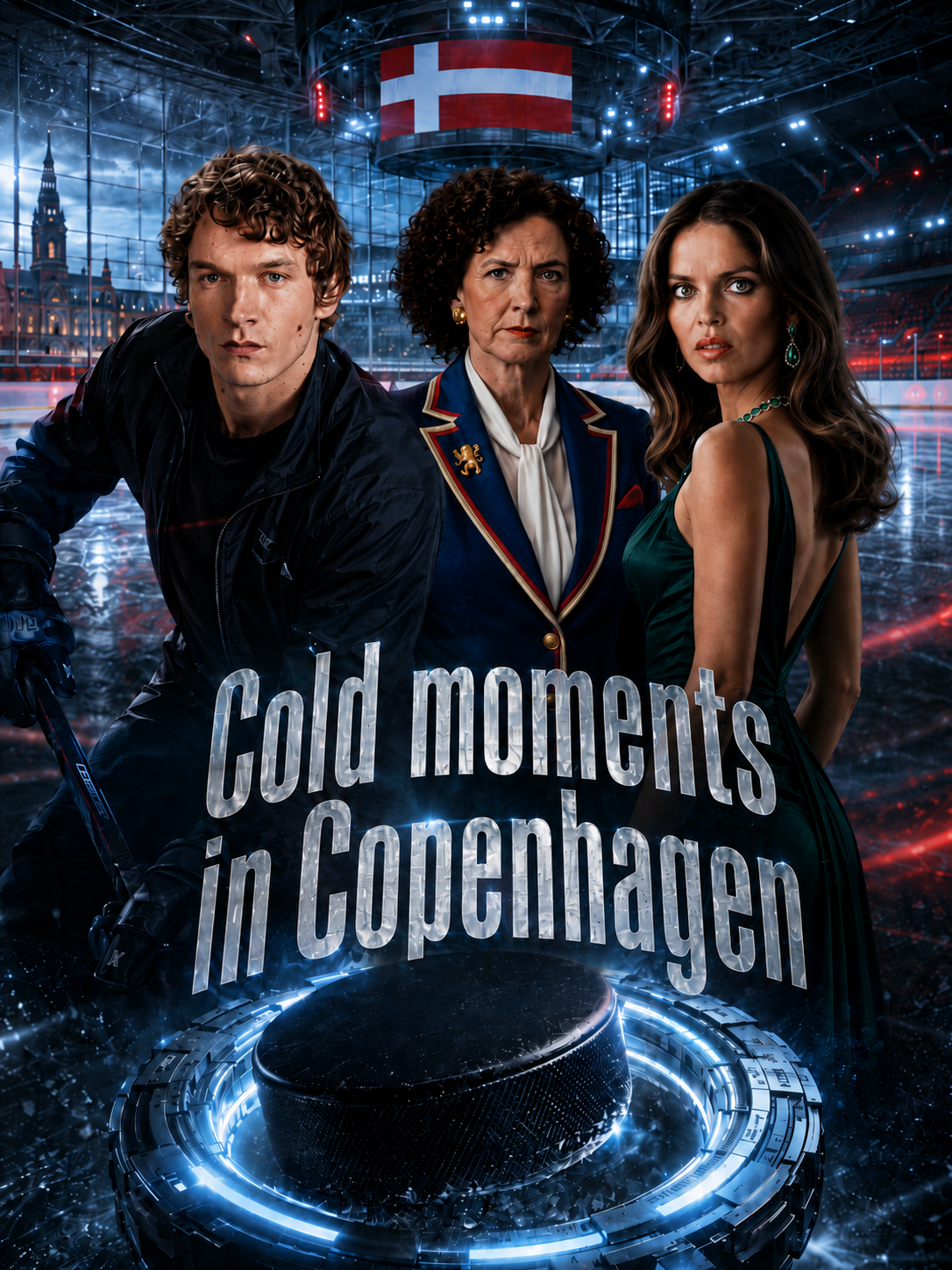
Volume 2: Cold moments in Copenhagen
Following
Table of Contents
The first conquest of Copenhagen The Second Conquest of Copenhagen The Third Conquest of Copenhagen Bearish Appearances The Disappearance Emerald-green seduction at the buffet Anya’s second offer The game in Suite 169 The waiting princess Sex instead of Puck The Entrance The Weapon The Portal Shane’s Rescue Attempt The Cold Comes of Its Own Accord Magnus stumbles into the car park Missing Neptunium Closed Gates The Goods Lift The Compromise Offer A Princess Receives Ilya’s Wish Claudia’s Timetable Anya’s Oily Alternative Ravn’s BanishmentClosed Gates
1325
0
0
Please Login in order to comment!
Find your way!
Resources
WHO WE ARE
LEGAL
Listen to our Podcast



by 3 Armored Kittens · Prodromos v.1.1 - World Anvil 0.9.15.050 © 2017-2025 [en] | Anvil Time: 19:01, Sep 10 2026