
The airlock didn’t open, but someone knocked on the door. A dull thud reverberated through the outer door, then a second, followed by a voice that sounded as though it were coming through two layers of sealant and concrete.
“Anya!”
Claudia and Anya looked at each other.
The six Neptunium rings continued to oscillate behind them, slow, dark, impossible. In the centre, the Pleistocene breathed into the wall behind the reactor room. White light, snow, wind, cold. The microsphere cluster generator hummed beside it with the insulting calm of a machine that didn’t know it was currently ruining history, physics and international security all at once. A blue glow seeped from the spent fuel pool at the back.
“You did bring someone with you,” said Claudia.
“No,” said Anya. “He must have followed me in.”
“And you didn’t notice?”
A third thud.
“I know you’re in there,” called Ilya. “And before you two decide whether I’m a security risk: the answer is yes, but I’m a useful one.”
Anya closed her eyes briefly.
“That’s Rozanov? You’ve brought a ice hockey player into a high-security lab. He can’t even count to three, can he?” said Claudia. She looked towards the airlock. “But if we leave him out there, he might set off an alarm.”
“If we let him in, he’ll talk.”
“He’ll talk out there too.”
Anya nodded reluctantly. She stepped up to the control panel but didn’t open the inner door straight away. Instead, she activated the intercom.
“Ilya.”
Ilya’s voice came through the loudspeaker, distorted. “Amasova.”
“You should have stayed in my suite.”
“I’m a Soviet athlete. Obedience isn’t my speciality.”
“Only with female coaches, not with female agents?”
Claudia ran her hand over her grey protective coat.
“He’s not coming in without protection.”
Anya pressed the intercom button again. “There are protective coats hanging on the left in the equipment room. Take one and put it on. Attach the dosimeter to the collar. Gloves. And don’t touch anything that looks expensive.”
“That’s almost everything in Copenhagen.”
“Then just don’t touch anything.”
Through the small observation window, they watched as Ilya put on the protective coat in the antechamber. He did so reluctantly, but not clumsily. He left the collar open at first, until Claudia said over the intercom: “Close it completely. Radiation isn’t a draught, Mr Rozanov.”
Then he fastened the coat. Only then did Anya open the inner airlock door. Ilya stepped inside.
The protective coat made him look broader, not less conspicuous. Beneath the grey fabric, one could still see the athlete, the tension, the darting eyes. He took two steps into the room, then stopped.
For the first time that evening, he said nothing.
His gaze moved from the generator to the rings, from the rings to the white patch in the air, then back to Claudia and Anya.
“Is that a tidal power station?” he said at last.
“No,” said Claudia curtly. “That’s a spherical cluster microreactor and a cold portal.”
Ilya kept looking at the portal. “Is that snow?”
“Pleistocene snow,” said Claudia.
“Plei…what?” said Ilya. Anya stood beside him, never taking her eyes off him. “Why did you follow us?”
He glanced briefly at her, then at Claudia.
“Because Shane isn’t the only one capable of making stupid decisions.”
Anya didn’t reply. Claudia stepped up to the terminal of the microsphere cluster generator.
“Then listen. This is the first part. A microsphere cluster generator. Compact, very cleanly shielded, extremely efficient. It delivers stable power, far more stable than a plant of this size ought to be capable of. That alone would be reason enough for three international investigations and at least one very nervous minister.”
Ilya stepped closer, but this time kept his distance of his own accord.
“So it is a reactor after all. Like a tidal turbine, only with spheres?”
“Yes. But not the old nightmare with a tower and steam and political rhetoric. More like a small, maliciously perfect star encased in ceramic.”
“Can it explode?”
“Anything can explode if people are ambitious enough. But that isn’t its main problem. Nuclear fission takes place inside the spheres, heating the water and driving turbines, which in turn generate electricity—a great deal of electricity.”
Anya pointed at the rings. “That is its main problem.”
Claudia nodded. “Six neptunium rings. They keep a temporal window stable. The generator supplies power to the control system. The tidal power station above is a cover and for cooling water logistics. It explains the pumps, channels and water movements without anyone having to think of looking for the Ice Age down here.”
Ilya stared into the white space between the rings.
“Are you serious? Or are you taking a hockey player for a fool?”
“Unfortunately, I’m serious.”
“That’s a hole in time?”
“Not a hole. A stabilised thermal access point.”
“That’s scientist-speak for a hole.”
“No. Scientist-speak for a hole would be ‘hole’.”
Anya grew impatient. “It draws cold from the Ice Age into the present. That’s what it’s all about.”
Ilya looked at her. “And you said that was a weapon.”
Anya stepped up to the display and pointed at the readings. “With this efficiency, you can cool large volumes of water in a targeted manner. Not just an ice rink. Not just a Danish harbour basin. A shipping channel, a military corridor, a chokepoint, or the dock of the British Atlantic Fleet or the French base in Martinique. You could stop ships, freeze propellers, destroy sensors, force submarines into pressure and ice problems. You wouldn’t even have to fire a shot. You alter the environment until the enemy loses its bearings.”
“A gate of ice,” said Ilya quietly.
Anya looked at him.
He lingered on the image. “You don’t place it in front of the enemy. You place it around them. They sail into it, and suddenly they’re no longer playing their game.”
“Exactly,” said Anya.
“Hormuz,” said Claudia.
Anya nodded. “Hormuz, Malacca, the Bosphorus, the Panama Canal, the Sunda Strait or the Suez approaches. Any place where a waterway means power.”
Ilya listened, but his gaze remained fixed on the portal. The snow behind it shifted as if a storm were raging somewhere in a time without people. Cold seeped through the rings and swept across the floor of the reactor room beneath the cooling vent at the top of the wall.
“No,” he said then.
Claudia looked at him. “No?”
“That’s not his plan.”
Anya fell silent.
“Stromberg’s plan?” she asked.
Ilya nodded.
“He’s not an admiral. He doesn’t think like someone who wants to stop a ship.”
Anya crossed her arms. “Men with money learn quickly how admirals think.”
“Perhaps. But he loves the sea.”
Claudia snorted. “That’s a very dangerous thing to say about a man with a hidden reactor.”
“I don’t mean in a friendly way. Fanatically.” Ilya stepped closer to the shielding of the rings. His breath turned white. “He doesn’t talk about ships. He talks about oceans as if they were sick and only he had understood the diagnosis. He doesn’t want to cool container ships. He doesn’t want to run ice rinks. The arena was just the test.”
Anya looked at him differently now.
Ilya continued speaking, more slowly, as if he first had to see his own insight on the ice before he could voice it.
“A player who wants to win at any cost eventually stops scoring goals. He wants to break the opponent. Not defeat them. Break them. Stromberg’s opponent is global warming. And if he builds this thing big enough, he won’t try to block individual waterways. He’ll set up large-scale versions of it along coastlines, in currents, in warm ocean zones.”
Claudia grew very quiet.
“To cool the oceans?” she said.
“Yes.”
The sentence fell into the reactor room and lay there, heavier than all the readings.
Anya looked at the rings. “That would be bigger than a weapon.”
“No,” said Ilya. “Worse. A weapon usually knows it’s a weapon. This would be a rescue mission that doesn’t stop once it starts killing.”
Claudia walked slowly to the next terminal. Her fingers flew over the keyboard. Data windows opened: temperature gradients, thermal import, stability windows, ocean models—not complete, but enough to confirm her suspicion. She read and grew paler.
“There are preliminary studies,” she said. “North Sea. Labrador Current. Bering Sea. Arabian Sea. No military nomenclature. Climatic nomenclature.”
Anya stepped up beside her.
Ilya continued to stare at the white window.
“Fauna and flora,” he said. “Currents. Plankton. Fish runs. Ice margins. If he cools it too much, global warming doesn’t die. Everything else does.”
Claudia nodded slowly. “Temperature isn’t a single adversary. It’s a relationship. Oceans aren’t ice cubes in a glass.”
“Tell that to Stromberg,” said Anya.
“I’d love to, but I’m afraid he’s currently leading a presentation on energy efficiency.”
Ilya looked at Claudia. “What happens if you take a lot more cold from the Ice Age?”
Claudia exhaled.
“That’s the wrong question.”
“Answer it anyway!”
She looked at the portal, and for the first time she seemed not just irritated or brilliant, but genuinely concerned.
“According to the laws of thermodynamics, heat doesn’t disappear. Energy shifts. If we bring cold into our present, physically speaking, that means we’re altering a temperature gradient. Heat is being absorbed somewhere. If this portal is really linked to the Pleistocene, the Ice Age could get warmer locally.”
Ilya blinked. “And that changes our past?”
“I don’t know.”
That was the worst thing Claudia Tiedemann could say.
Anya heard it immediately.
“You don’t know?”
“No. Because no one in their right mind would conduct such an experiment on a large scale.”
“But theoretically?”
Claudia looked at the oscillating rings. “Theoretically, there could be feedback loops. Perhaps only locally. Perhaps not causally linked to our timeline at all. It might simply alter an isolated thermal state from which Stromberg steals energy. In the worst-case scenario, however, we’re interfering with a past that remains connected to our present.”
“Then he could make the Ice Age warmer,” said Ilya.
“Or more unstable,” said Claudia. “Or simply different. That’s the problem. The past isn’t a warehouse. You can’t just go there, take out the cold and hope the bill never comes.”
Anya spoke softly. “Could it also tip the other way?”
Claudia looked at her.
“What do you mean?”
“If the facility gets bigger. If several portals are operating. If the present doesn’t just take cold, but thermally couples. Could it trigger a new ice age here?”
The hum of the generator suddenly sounded louder. Claudia didn’t answer straight away.
Ilya looked back and forth between the two women. “Could it?”
“Perhaps not with a single device,” said Claudia slowly. “But if you mis-couple enough energy flows, if you cool currents, alter albedo, intensify ice formation, disrupt ocean circulation… yes. Then you could reach tipping points. Not suddenly, like a fairy-tale curse. But the climate isn’t a machine. It doesn’t wait until all the protocols have been signed.”
Anya looked at the portal, now with the same coldness in her gaze that emanated from it.
“Then this isn’t cooling technology.”
“No,” said Claudia.
Ilya finished the sentence.
“It’s a move against the world.”
No one contradicted him.
Behind the transparent walls, the six neptunium rings oscillated faster, as if they’d understood the word. The snow in the portal swirled more thickly. For a moment, a dark shape was visible behind the white cut — perhaps a rock, perhaps a shadow in the storm, perhaps just a disturbance in the light.
Claudia stepped closer to the terminal.
“The readings are rising.”
Anya looked towards the airlock. “Then we need to back up the data and get out.”
“No,” said Claudia. “We need to understand how to switch it off.”
“And what if switching it off has shifted Lind?”
Claudia was silent.
Ilya said, “Then we still need to know where the switch is.”
Anya looked at him. “You’ve gone from hockey player to world-saver in a flash.”
“No,” said Ilya. “I’m still a hockey player. I just know when someone’s messing with the ice.”
A warning light on the generator flashed from blue to yellow.
Not an alarm. Not yet.
More like a premonition in electronic form.
Claudia placed both hands on the console. “I need time.”
Anya laughed dryly. “That’s probably the most dangerous thing you could say in this room.”
Ilya stood between the airlock and the portal, as if his body could stop anything made of physics, megalomania and the Ice Age.
“Then let’s take some,” he said.
And behind him, the Pleistocene breathed deeper into Copenhagen.
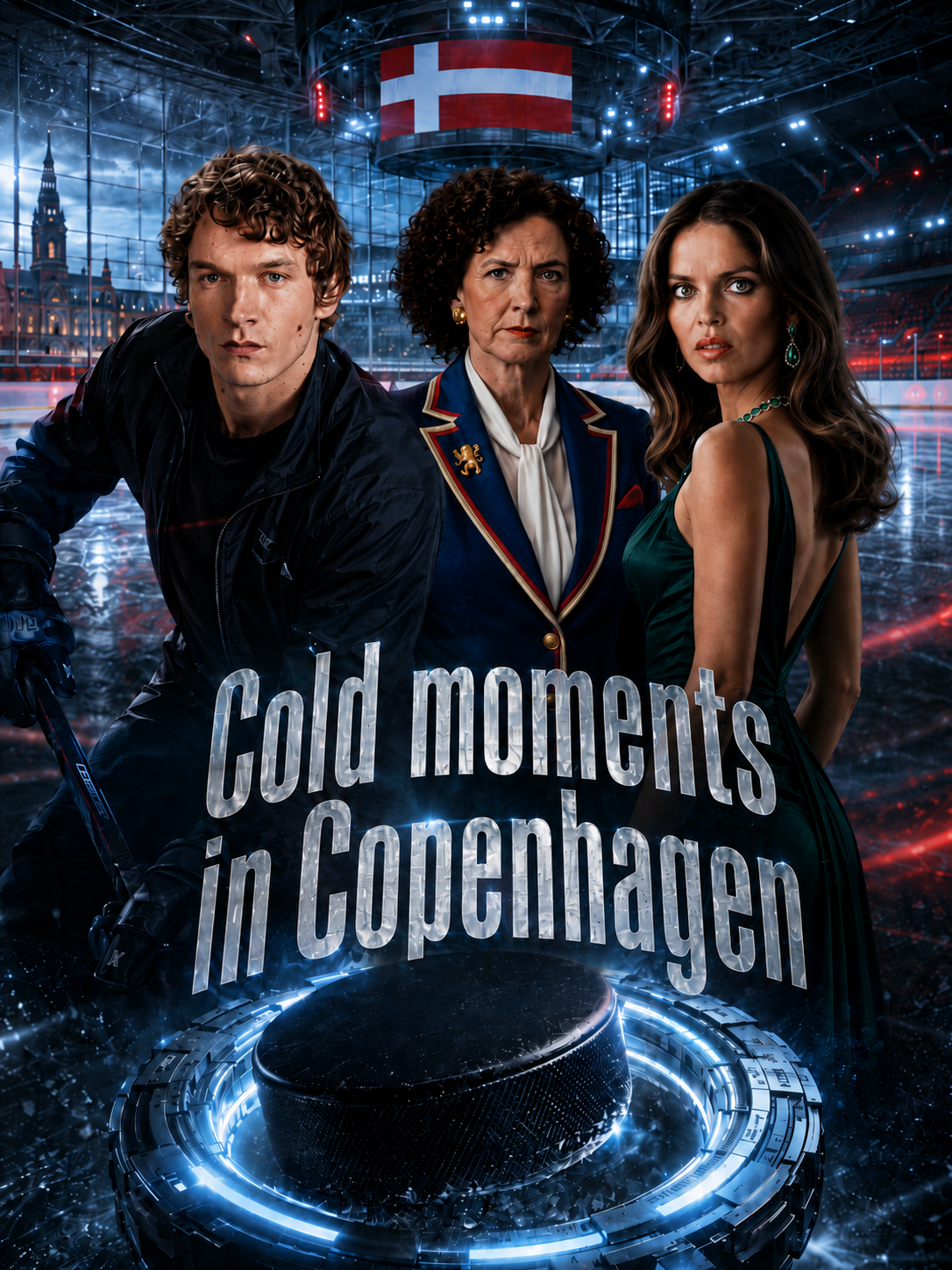
Volume 2: Cold moments in Copenhagen
Following
Table of Contents
The first conquest of Copenhagen The Second Conquest of Copenhagen The Third Conquest of Copenhagen Bearish Appearances The Disappearance Emerald-green seduction at the buffet Anya’s second offer The game in Suite 169 The waiting princess Sex instead of Puck The Entrance The Weapon The Portal Shane’s Rescue Attempt The Cold Comes of Its Own Accord Magnus stumbles into the car park Missing Neptunium Closed Gates The Goods Lift The Compromise Offer A Princess Receives Ilya’s Wish Claudia’s Timetable Anya’s Oily Alternative Ravn’s BanishmentThe Portal
1300
0
0
Please Login in order to comment!
Find your way!
Resources
WHO WE ARE
LEGAL
Listen to our Podcast



by 3 Armored Kittens · Prodromos v.1.1 - World Anvil 0.9.15.050 © 2017-2025 [en] | Anvil Time: 19:01, Sep 10 2026